
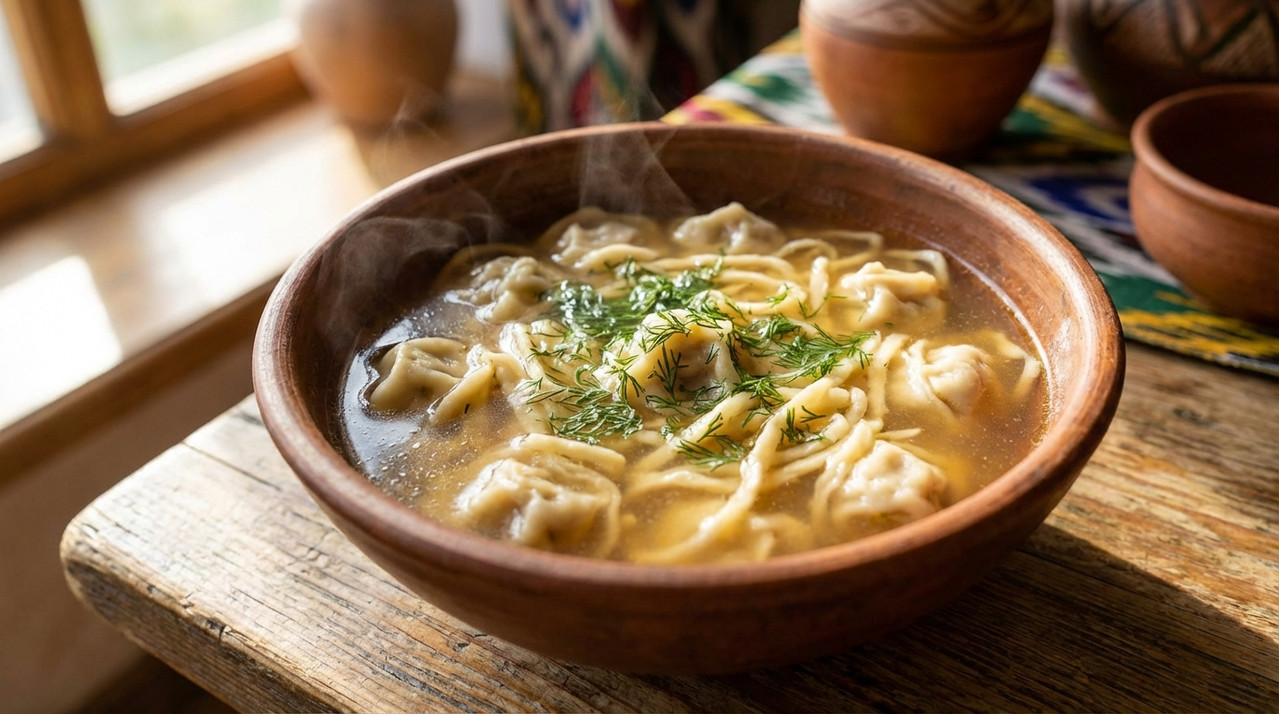
Chuchvara Recipe | Chewy Hand-Pulled Noodles (Uzbek Comfort)
You know that moment when your Uzbek grandmother’s hands move faster than your eyes, pulling dough into impossibly thin strands over her worn wooden table? That’s where I learned Chuchvara — not from a book, but from watching her knuckles whiten as she stretched the dough, humming old folk songs while flour puffed like dust clouds in the Tashkent sun. "Patience, bolam," she’d say, tapping my wrist. "Good noodles don’t rush." I still remember the first time I tried it alone — my strands snapped like angry spaghetti, and she just laughed, handing me a spoonful of broth to sip while we restarted. "The breaks," she winked, "are part of the story."
Turns out, this soup isn’t just food — it’s a love letter to resilience. My baba’s family made Chuchvara through winters when stores closed, pulling noodles by hand because machines froze solid. The broth? Simmered for hours with onion and a bay leaf, never rushed. And that pinch of salt in the dough? It’s not just flavor — it’s what keeps the noodles from turning to mush when they hit the pot. If your broth tastes flat, honey, you skipped the soul of it. I learned the hard way when my first batch tasted like boiled water. Now? I always taste as I go, adjusting like we’re tuning a sitar.
Here’s the secret nobody shares: Chuchvara’s magic is in the pulling. Not rolling — pulling. You stretch the dough thin, then lift and drape it over your knuckles, letting gravity do the work. My kids think it’s a party trick, but it’s sacred geometry. Too thick, and they’ll chew like leather; too thin, and they vanish into the broth. I’ve hidden pots from my own children when they beg for "soup with magic noodles" before dinner’s ready — because watching them slurp those chewy strands, eyes wide with wonder? That’s the real recipe. No fancy tools, just your hands and a little faith.
Instructions
- In a big bowl, mix flour and salt. Make a well, crack in the egg, and slowly stir in water until a shaggy dough forms — it’ll look messy, and that’s perfect.
- Knead it on a floured surface for 8-10 minutes until smooth — press a finger in; it should spring back like your earlobe, not stick like glue.
- Cover with a bowl and let it rest 30 minutes. This is when the dough breathes and gets supple. Go water the plants, pet the cat — do anything but peek.
- Roll it out thin as a whisper, then lift a corner and pull it over your hand into long strands. Don’t worry if they’re uneven — that’s what makes them homey. Toss them gently into the simmering broth.
- While noodles cook (just 2-3 minutes!), simmer your strained broth with onion until it smells like a Central Asian kitchen. Ladle into bowls, sprinkle with fresh dill, and serve hot.
- And if your first batch snaps? Laugh. Then try again. That’s how we keep the tradition alive — one imperfect strand at a time.
Comments